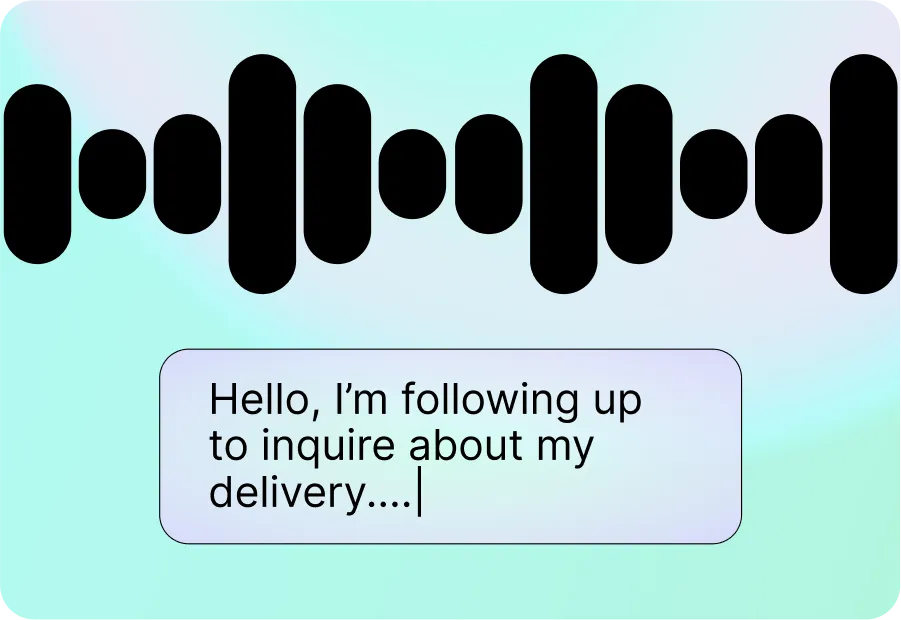
Deploy speech-to-text workflows through a single flexible API. Switch between supported transcription models with minimal code changes and build real-time voice experiences with accurate, low-latency transcription.
Transcribe speech into accurate, real-time text and see how your team can capture, analyze, and act on voice interactions using Quantrova’s STT Router.
Deepgram delivers fast, reliable transcription but you’re locked to their models with no engine flexibility. Their outage becomes your outage with no built-in failover. Separate from telephony means extra network hops add latency to real-time applications.
AssemblyAI offers limited streaming support because it’s designed for batch processing, not live conversations. Requires separate integration from telephony infrastructure, adding complexity and latency to voice applications.
Whisper delivers high transcription accuracy but with higher latency that breaks real-time conversations. No SLA guarantees or automatic failover means production reliability is uncertain. Manual language selection requires knowing the language upfront.
Hyperscaler STT services were designed for batch workloads and recorded audio, not live voice. Separate service integration adds network latency. Pick one optimization approach and you must stick with it: there is no per-request routing flexibility.
STT Router helps reduce the trade-offs between accuracy, speed, cost, and language coverage. Quantrova gives you access to multiple STT engines through one unified workflow designed for real-time voice applications.
Connect to multiple STT providers without managing separate vendor relationships. Switch between engines instantly based on your needs, and skip the usual required development work when better models emerge.
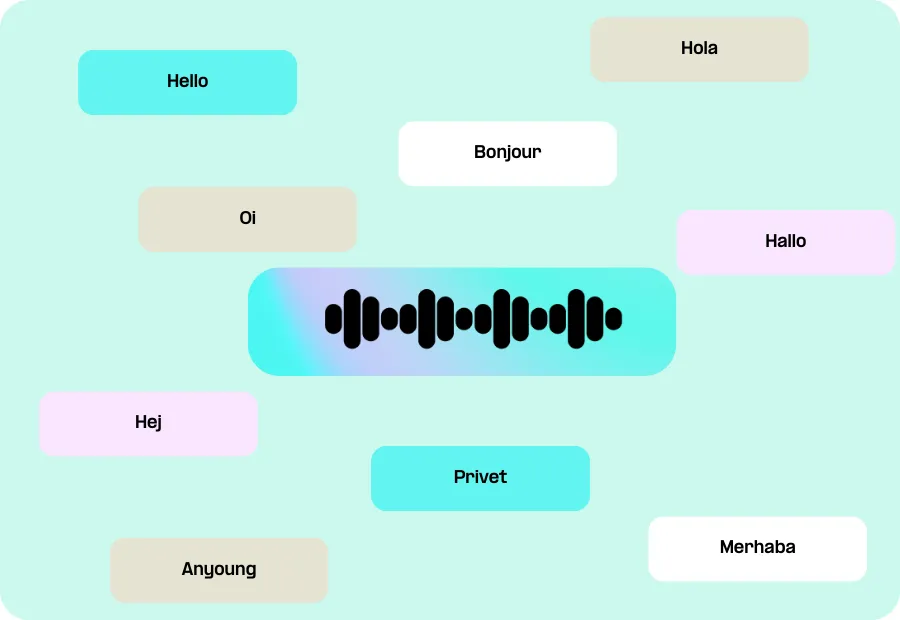
Support 100+ languages so you can scale globally without managing separate integrations for each market.
Transcription happens where audio terminates: at the same facility as call processing. No internet round-trips means your users get instant results instead of waiting through network delays.
Route to the most cost-effective engine for each use case without sacrificing quality. Avoid premium pricing when basic transcription works, or use high-accuracy models only when critical, thereby optimizing spend automatically.
Build reliable voice experiences with flexible transcription options. Quantrova gives you access to multiple ASR engines through one integration.
Quantrova STT
Quantrova STT runs on real-time streaming infrastructure and supports multilingual transcription with automatic language detection.
Google STT
Google supports over 80 languages with strong coverage across African languages and diverse regional variants. It is a stable, general-purpose transcription engine well suited for large-scale, multilingual applications.
Deepgram Nova 2
Nova 2 supports 54 languages and delivers strong ASR accuracy with modern accent and dialect variation. It is ideal for AI agents, customer interactions, and use cases where precise recognition matters across supported languages.
Deepgram Nova 3
Nova 3 supports 20 languages and is a newer model focused on premium audio quality within its smaller range. It works best for high-value interactions that require maximum clarity in languages the model supports.
Deepgram Flux
Deepgram Flux is built for responsive, real-time transcription where conversational flow matters. It helps eliminate interruptions and false cutoffs with smarter turn detection, making live voice experiences feel more natural and reliable.
Azure STT
Azure Speech-to-Text is a strong option for teams building production voice workflows that need reliable, real-time transcription, broad language coverage, and enterprise-ready performance.
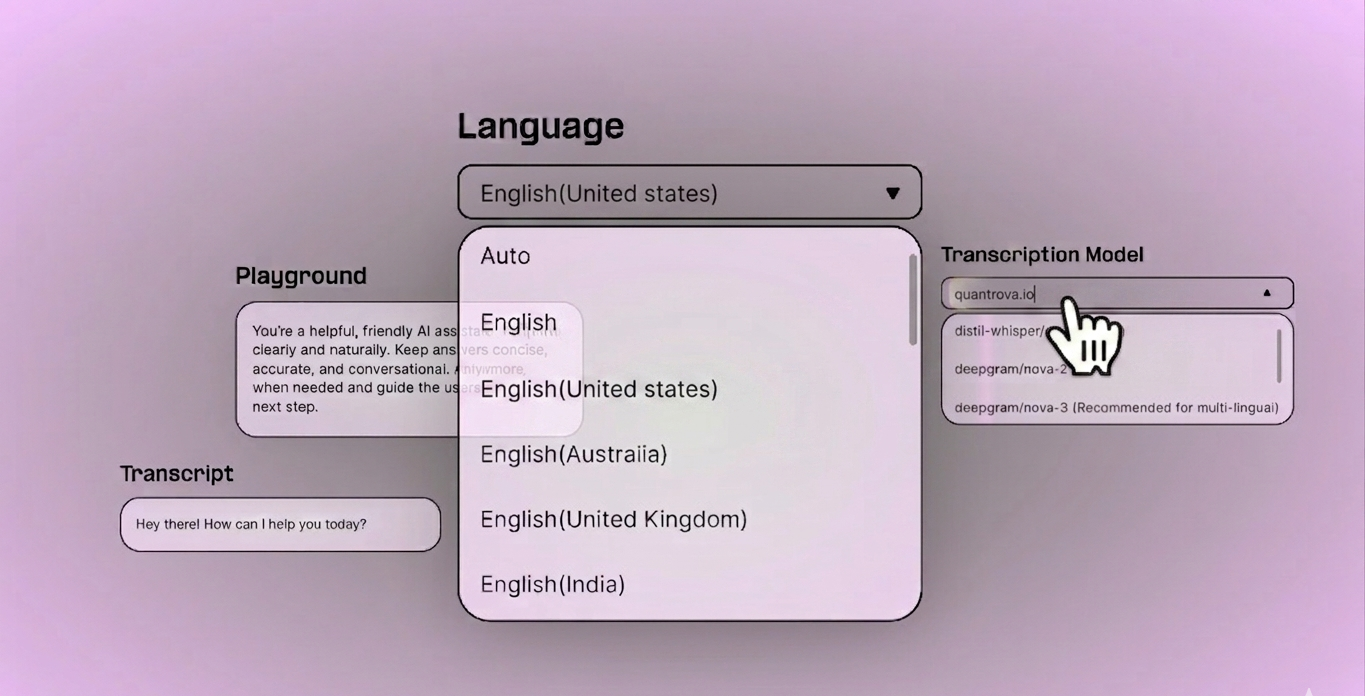
Built on Quantrova’s optimized voice infrastructure, STT Router helps reduce the complexity of managing multiple speech-to-text providers. Access leading engines like Deepgram and Whisper through one API, and switch via configuration instead of code changes.
Multi-engine routing
Connect to multiple STT providers through one integration without managing separate vendor relationships.
Future-Proof STT Architecture
New STT engines can be added as they become available. Access better models without rearchitecting your voice AI stack or changing integrations.
Secure processing controls
STT processing is designed with secure handling, configurable routing, and privacy-focused controls for business voice workflows.
Single API surface
Use one consistent integration regardless of which STT engine processes your audio.
No vendor lock-in
Switch providers with configuration changes, not code rewrites or new integrations.
Co-located with telephony
Eliminate latency by transcribing where your calls terminate, avoiding extra network hops.
Enable real-time speech input for conversational AI, customer support bots, and virtual agents. Fast, accurate transcription keeps dialogues natural and seamless.
Provide instant captions, subtitles, and real-time meeting notes. Improve accessibility for users with language barriers or hearing impairments.
Capture notes and tasks without manual typing.Perfect for doctors, drivers, field technicians, and on-the-go professionals.
Transcribe speech across languages, accents, and regional dialects. Ideal for travel, hospitality, e-learning, logistics, and support workflows.
Power responsive, low-latency voice commands for kiosks, smart devices, automotive systems, and AR/VR experiences.
Transcribe customer calls, support interactions, and agent workflows in real time. Improve routing, analytics, and AI-assisted support with accurate, instant speech recognition.
Route to multiple STT engines through one API. Choose Deepgram, Whisper, or other engines per request based on your accuracy, latency, or cost requirements.
Explore a wide range of text-to-speech voices from multiple supported providers in one place. Compare voice styles, tones, and languages to find the right sound for your product experience.
Explore clear STT API pricing with flexible options that scale with your usage. Choose simple pay-as-you-go rates or volume-based pricing for higher transcription needs.
STT Router is a unified transcription API that gives you access to multiple STT engines like Whisper, Deepgram, and other supported providers through one integration. Instead of choosing one vendor, you can optimize for accuracy, latency, cost, or language per request.

Going direct locks you into one engine’s trade-offs. Whisper is accurate but slow. Deepgram is fast but costs more. STT Router gives you all engines through one API, so you can use Whisper for accuracy-critical requests and Deepgram for speed-critical ones, all without managing multiple integrations.
One API replaces 3 to 4 STT integrations. You get one endpoint, one SDK, one response format regardless of which engine processes your audio. No complex multi-vendor orchestration, no inconsistent response formats, and fewer integration layers to manage.
Yes. Swap engines with config changes, not code rewrites. Test new engines, optimize for different use cases, or migrate providers without re-architecting your application.
Transcription is designed to run close to where voice traffic is processed, helping reduce unnecessary network hops and improve real-time performance.
Teams building voice AI, IVR systems, or real-time transcription who want the best engine for every use case without managing multiple vendor integrations. This is especially useful if you’re hitting cost or latency ceilings with a single vendor or need multi-language support.
Integrate with our single API. You can start with your preferred engine and add others over time. No need to replace your existing transcription setup. Route through STT Router to access additional engines and manage transcription through one flexible workflow.